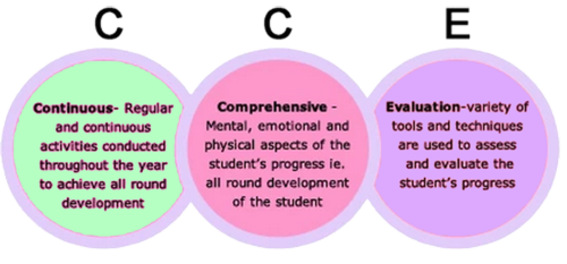
Continuous and Comprehensive Evaluation (CCE), is an education system recently introduced by CBSE, found its main aim in the overall evaluation of the learners. It was formulated to do away with the exam-centric approach which was very common in our evaluation system.
Continuous and Comprehensive Evaluation (CCE) aimed to bring the focus on developing all aspects of an individual’s personality development. The cognitive, affective and psychomotor skills of learners, though recognized as vital aspects in learning, had somewhere evaded the exam oriented education system. The main aim of CCE was to evaluate every aspect of the child during their presence at the school like curricular as well as non-curricular together. This is believed to help student reduce the pressure during or before examinations as the student will have to sit for multiple tests throughout the year. The CCE method is claimed to bring lot of changes from the traditional method of teaching, provided it is implemented accurately. Here also if the student was not able to perform well in one pattern of evaluation he or she is getting other chances for improving. One examination won’t determine the capability of student.
As a part of this CCE system, student’s marks were replaced by grades which were evaluated through a series of curricular and extra-curricular evaluations along with academics and the ultimate aim was to decrease the workload on the student by means of continuous evaluation by taking number of small tests throughout the year in place of single test at the end of the academic program. So in conclusion we can say that there are lot of advantages of using CCE in school level students.

 Shiksha